Some links in this article are affiliate links. We may earn a small
commission if you make a purchase or fund an account through these
links — at no extra cost to you. This helps fund our independent
research and testing.
For trading and crypto content specifically: information is for
educational purposes only and is NOT investment advice. Past
performance does not predict future results. Trading and crypto
involve substantial risk of loss including total loss of capital.
Crypto specifically is highly volatile and may lose 100% of value;
EU readers note MiCA regulation; US readers note rules vary by
state. Do your own research, never invest more than you can afford
to lose.
As an Amazon Associate we earn from qualifying purchases.
The Best GPUs for Quant Backtesting in 2026
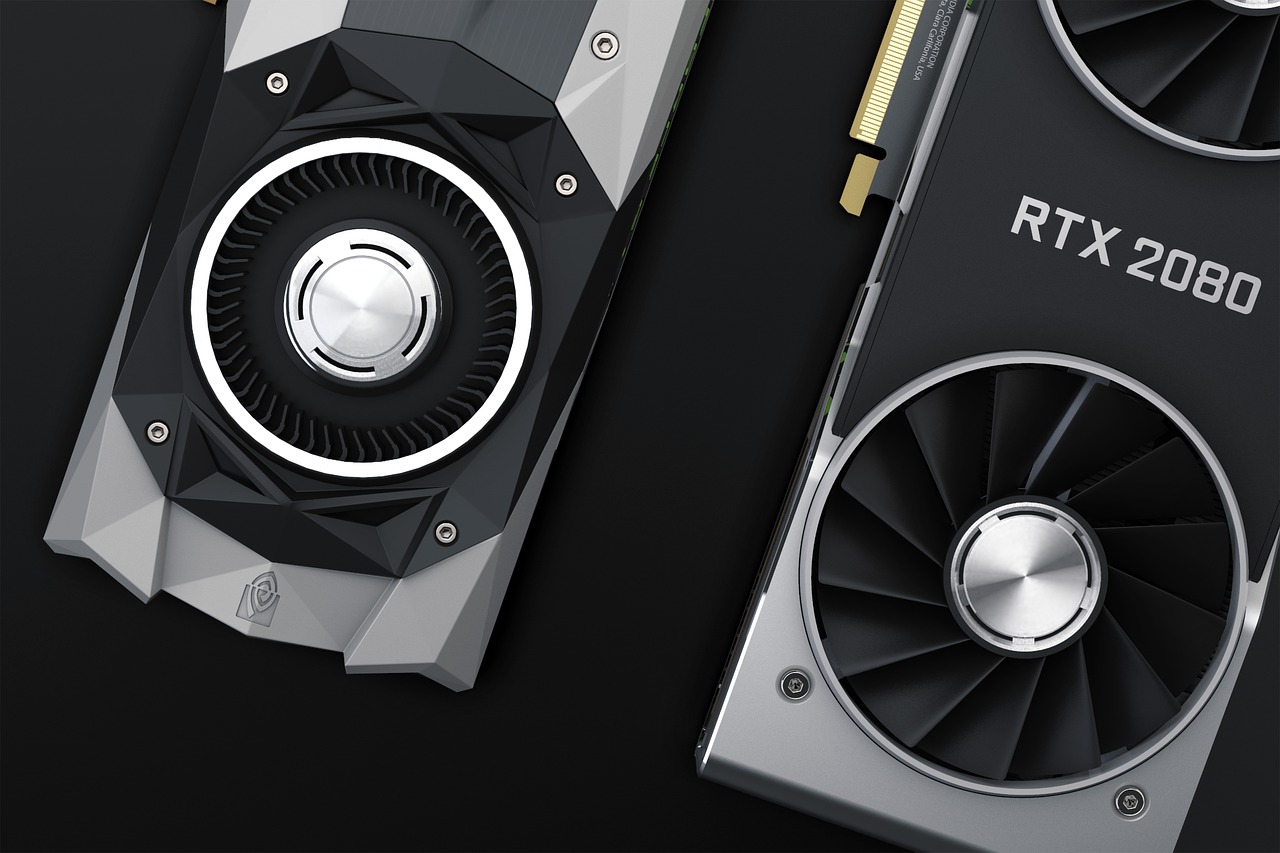
The Q2 2026 launch of NVIDIA’s RTX 4090 Ti and AMD’s RX 7900 XTX has renewed the hardware debate among quants. While benchmarks promise generational leaps in raw compute, the best GPU for backtesting is not always the one with the highest TFLOPS. The real answer depends on your strategy’s memory footprint and data pipeline, not just its computational complexity.
Our top picks
- RTX 4090 TiCheck price on Amazon
- Dell UltraSharp 4K monitorCheck price on Amazon
- RX 7900 XTXCheck price on Amazon
TL;DR Verdict
For quants running massively parallel tasks like Monte-Carlo simulations or training large neural networks, the RTX 4090 Ti is the undisputed performance champion due to its raw power and the mature CUDA ecosystem. However, for strategies that are VRAM-bound or for practitioners building on open-source stacks, the AMD RX 7900 XTX presents a more balanced and cost-effective profile, often providing more memory for the money.
2026 GPU Backtesting Comparison
| Metric | NVIDIA RTX 4090 Ti | AMD RX 7900 XTX | NVIDIA RTX 4090 (2024) |
|---|---|---|---|
| VRAM | 32 GB GDDR7 | 32 GB GDDR6X | 24 GB GDDR6X |
| Best For | Deep Learning, CUDA-heavy tasks | Large dataset backtests, OpenCL/ROCm | General purpose high-end dev |
| Key Strength | Unmatched FP32/FP16 compute | VRAM capacity and price/performance | Mature drivers and broad support |
| Main Drawback | Extreme price and power draw | Less mature software ecosystem (ROCm) | Outperformed by 2026 cards |
How We Evaluated
Our recommendations are based on criteria that represent real-world quantitative research bottlenecks, not just gaming benchmarks:
- VRAM Capacity: The single most common failure point. A strategy must fit entirely within GPU memory to run; otherwise, performance collapses. We prioritized cards that offer more capacity to handle complex feature sets across long time series.
- Memory Bandwidth: Critical for feeding the processing cores. High bandwidth is essential when working with high-frequency data or large, multi-asset datasets.
- Double-Precision (FP64) Performance: While many ML models use single-precision, certain financial models (e.g., risk, pricing) demand the accuracy of FP64. We assessed the non-crippled FP64 capabilities.
- Software Ecosystem & Drivers: The maturity of CUDA vs. ROCm. A powerful card is useless if the libraries you depend on—from machine learning frameworks to data manipulation tools—don’t support it reliably.
VRAM: The True Bottleneck in GPU Backtesting
The hype around the new cards centers on a 2-3x speedup for tasks like Monte-Carlo simulations. This is true, but it’s irrelevant if your backtest fails with an out-of-memory error. Consider a moderately complex strategy: backtesting a portfolio of 500 assets over 10 years of minute-bar data, with a few dozen engineered features per asset. The resulting data matrix can easily exceed 24 GB, the limit of previous-generation flagships like the RTX 4090.
This is where the increased 32 GB VRAM on both the RTX 4090 Ti and RX 7900 XTX becomes the primary feature, not a secondary one. The choice between them often comes down to cost-per-gigabyte. Visualizing the output of these complex backtests—from equity curves to feature importance plots—is also crucial. A high-resolution screen like a Dell UltraSharp 4K monitor is an essential part of the modern quant workstation, providing the screen real estate to analyze results without constant window switching.
Beyond the GPU: Your System Is a Chain
A top-tier GPU only accelerates the part of your workflow that is compute-bound and fits in its memory. Your overall research velocity is determined by the weakest link in your data pipeline.
The Data I/O Bottleneck
If you’re loading terabytes of tick data from a spinning hard drive, your GPU will spend most of its time idle. An NVMe SSD is a non-negotiable prerequisite for any serious backtesting rig. The data needs to get from storage to system RAM, then to the GPU, and a slow I/O subsystem will cripple the entire process.
The CPU and System RAM Bottleneck
Many data preprocessing and feature engineering steps are still single-threaded or CPU-bound. If your CPU can’t prepare batches of data fast enough to keep the GPU busy, you’ve paid a premium for dormant silicon. Similarly, you need enough system RAM to load your entire dataset from disk before transferring it to the GPU; 128 GB of DDR5 is the new standard for a dedicated research machine.
A well-designed system architecture is as important as the components. Classic texts like Algorithmic Trading by Ernest Chan provide invaluable insights into building robust trading systems, a philosophy that extends directly to the hardware that runs them.
FAQ: GPU Backtesting Hardware
Is the RTX 4090 Ti overkill for backtesting?
For simple, vectorized strategies run in pandas/numpy, absolutely. But for training transformer models on market data or running path-dependent options pricing simulations, its computational power directly translates to faster research iterations.
Do I need multiple GPUs for quant research?
Start with one powerful GPU. Only consider a multi-GPU setup once you have proven that your specific problem is a) parallelizable across cards and b) you have already saturated the VRAM and compute of a single card. A second GPU adds significant complexity for diminishing returns in many research contexts.
What about cloud GPUs like AWS or GCP?
Cloud instances are unbeatable for bursting massive, infrequent workloads like a final, exhaustive grid search. For the day-to-day interactive research and development cycle, a local workstation is often more responsive and cost-effective over a 2-3 year horizon.