Some links in this article are affiliate links. We may earn a small
commission if you make a purchase or fund an account through these
links — at no extra cost to you. This helps fund our independent
research and testing.
For trading and crypto content specifically: information is for
educational purposes only and is NOT investment advice. Past
performance does not predict future results. Trading and crypto
involve substantial risk of loss including total loss of capital.
Crypto specifically is highly volatile and may lose 100% of value;
EU readers note MiCA regulation; US readers note rules vary by
state. Do your own research, never invest more than you can afford
to lose.
As an Amazon Associate we earn from qualifying purchases.
Is More GPU Power Always the Answer for Faster Backtests?
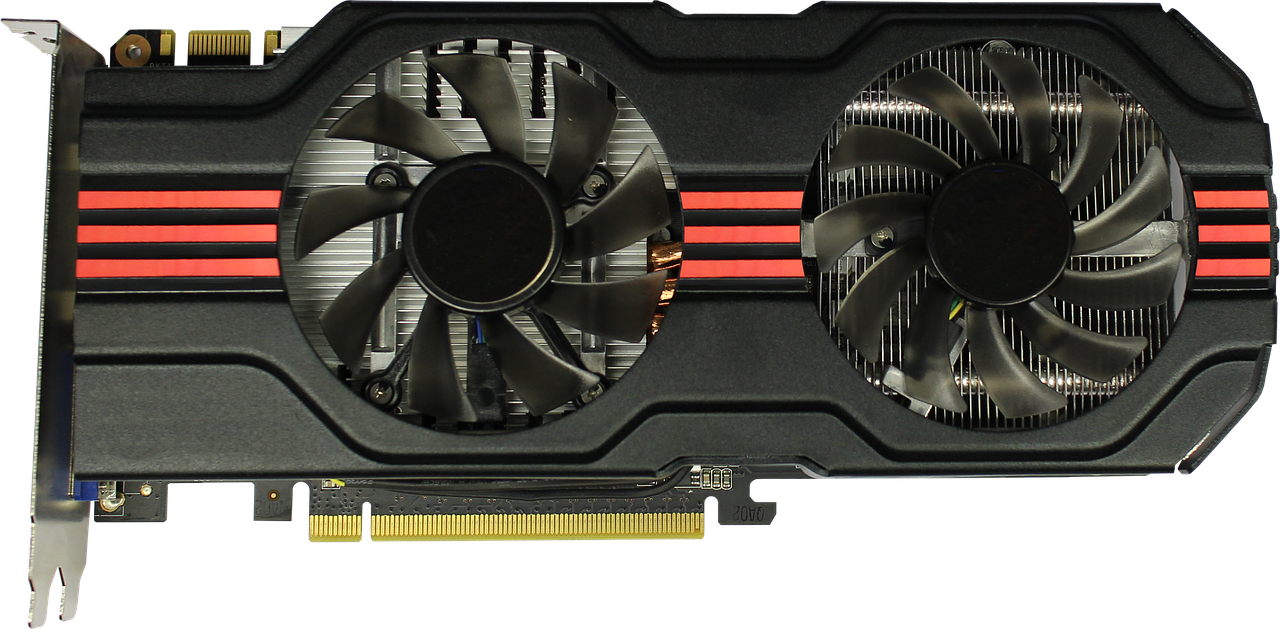
The release of the RTX 4090 Ti and AMD RX 7900 XTX in Q2 2026 has predictably flooded forums with questions about slow backtests. Before you spend a fortune on the shiniest new hardware, let’s cut through the noise. The bottleneck in your research pipeline is often not where you think it is, and the most expensive hardware is rarely the smartest choice.
Our top picks
- RTX 4090 TiCheck price on Amazon
- Dell UltraSharp 4K monitorCheck price on Amazon
- AMD RX 7900 XTXCheck price on Amazon
TL;DR Verdict
For most individual quants and small funds, the AMD RX 7900 XTX is the superior choice for GPU backtesting in 2026 due to its exceptional price-to-performance ratio on parallelizable tasks. The RTX 4090 Ti is only a justifiable expense for those running massive, high-precision Monte Carlo simulations or training complex deep learning models where CUDA’s ecosystem provides a critical edge.
2026 GPU Backtesting Options Compared
| Model | Estimated Price (USD) | Best For | Key Strength | Main Drawback |
|---|---|---|---|---|
| RTX 4090 Ti | – | Institutional-scale ML, High-precision simulations | Unmatched raw performance & mature CUDA ecosystem | Exorbitant price, diminishing returns for most tasks |
| AMD RX 7900 XTX | – | Price-conscious quants, vectorized backtesting | Best-in-class performance per dollar, high VRAM | ROCm ecosystem is less mature than CUDA |
| NVIDIA RTX 4090 (2024) | – | Budget-constrained CUDA development | Proven stability, wide library support | Outperformed by new cards at a similar price point |
How We Evaluated
We’re not chasing frame rates. Our evaluation prioritizes metrics that directly impact quantitative research workflows:
- Memory Bandwidth: The speed at which large datasets (e.g., tick data, feature matrices) can be fed to the GPU. A slow bus creates a bottleneck that negates core speed.
- FP64 Performance: Double-precision floating-point capability is non-negotiable for many financial models where precision errors can compound catastrophically.
- Software Ecosystem (CUDA vs. ROCm): A powerful card is useless if your core libraries don’t support it. We assess the practical maturity of the driver and library ecosystem for tools like JAX, PyTorch, and Numba.
- Performance-per-Dollar: Alpha is the goal, not benchmark supremacy. We evaluate which card frees up the most capital for data, books, and other resources that actually generate ideas.
The Real Bottleneck: It’s Not Your Cores, It’s Your Data
The single biggest mistake traders make is over-investing in compute cores while ignoring the data pipeline. Your backtest speed is a chain, and it’s only as fast as its weakest link. A top-tier RTX 4090 Ti will spend most of its time idle if it’s waiting for data to be loaded from a slow SSD or, worse, swapped from system RAM because you ran out of VRAM.
This is where the AMD RX 7900 XTX shines. It offers a massive pool of high-bandwidth memory at a price that leaves budget for what really matters: fast NVMe storage and sufficient system RAM. For tasks like vectorized backtesting, where you load a large matrix of historical data once and perform parallel operations, memory bandwidth is far more critical than raw TFLOPs. Don’t starve your GPU.
CUDA’s Moat Is Drying Up for Mainstream Quant Tasks
For years, NVIDIA’s CUDA was the only game in town, making any non-NVIDIA card a non-starter. That reality has changed. AMD’s ROCm platform has matured significantly, with robust, first-party support in the most critical frameworks for quantitative finance, including PyTorch and JAX.
Unless you are working with legacy proprietary CUDA libraries or highly specialized deep learning architectures, you will likely not notice a difference in software compatibility. The performance gap in raw compute is real, but the practical ability to execute your code is now largely a solved problem on AMD hardware. For the vast majority of Python-based quant research, the CUDA “moat” is no longer worth a 100% price premium.
Invest in Your Brain, Not Just Your Rig
A faster backtest is worthless if the ideas you’re testing are flawed. The diminishing returns on high-end hardware set in quickly. The performance jump from the RX 7900 XTX to the RTX 4090 Ti might save you a few hours a week, but that time is easily wasted on statistically insignificant strategy tweaks.
Consider reallocating that price difference. You could buy a high-resolution Dell UltraSharp 4K monitor to reduce eye strain and spot patterns in charts more easily. You could purchase a library of foundational texts, like Advances in Financial Machine Learning, that provide new frameworks for thinking about alpha generation. A better idea that runs 10% slower is infinitely more valuable than a bad idea that completes in half the time.
FAQ
Do I need the RTX 4090 Ti for options pricing backtests?
No, not unless you are a large institution running portfolio-level Monte Carlo simulations on exotic derivatives. For testing strategies on standard options, the FP64 performance and VRAM of the AMD RX 7900 XTX are more than sufficient.
Is VRAM more important than core speed for backtesting?
For strategies involving large datasets (e.g., high-frequency data, wide feature sets), yes. Insufficient VRAM is a hard bottleneck that forces slow data transfers with system RAM, completely negating any advantage from faster cores.
Why isn’t my Python backtest faster after upgrading my GPU?
A GPU doesn’t automatically accelerate all code. Your backtesting engine and libraries (like Pandas or NumPy) must be explicitly written to run on the GPU using frameworks like CuPy, Numba, or JAX. A standard CPU-bound script will see zero benefit.